Human-Robot Integrated Simulation
KAIST Exoskeleton Lab
Human-Robot Integrated Simulation (HRIS)
Human Model for Human-Centered Physical AI
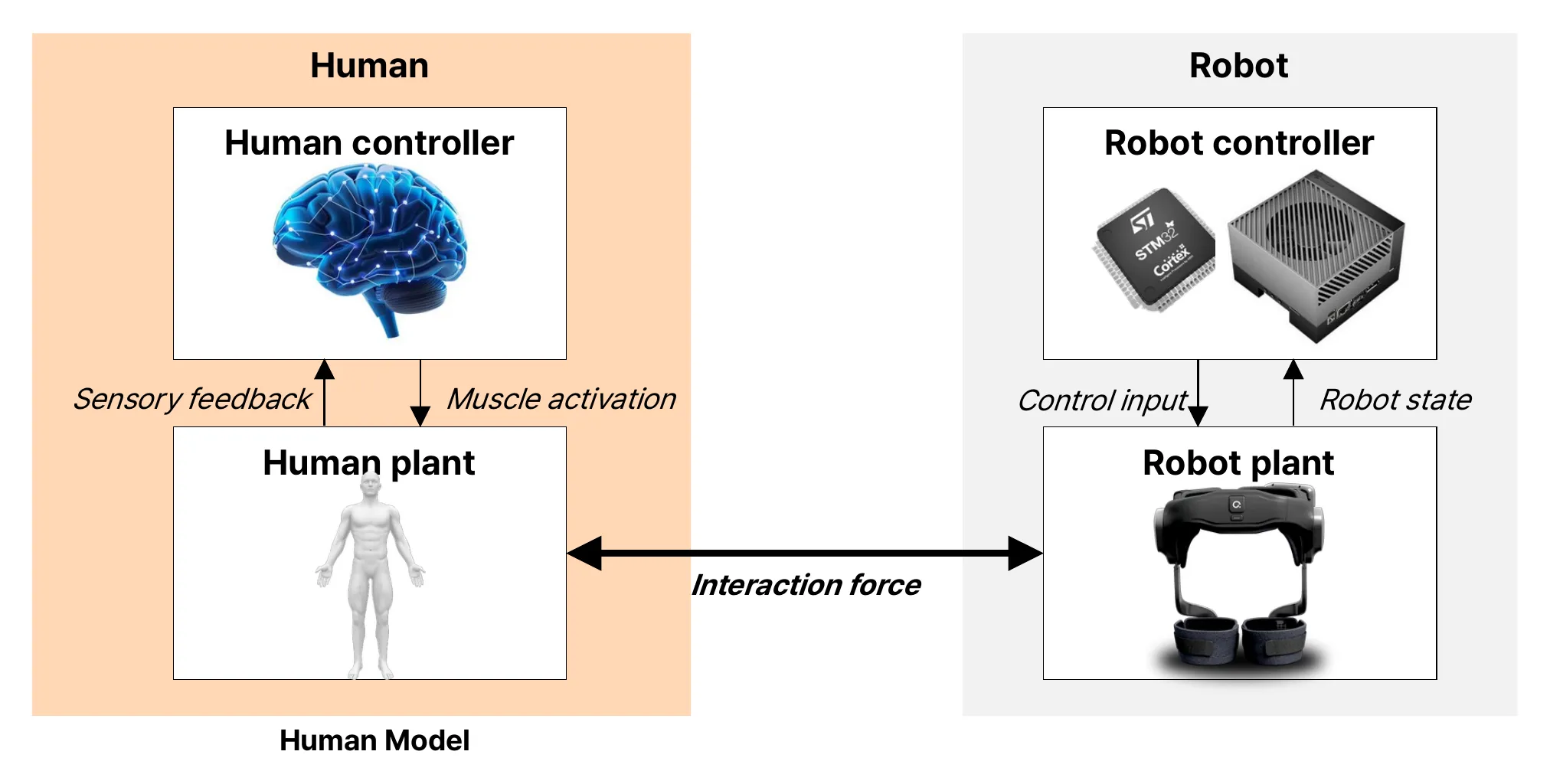
Physical AI systems that physically interact with humans must understand not only how humans move, but also how humans respond to robotic assistance. The Human-Robot Integrated Simulation (HRIS) team develops computational human models that interact dynamically with wearable robots in simulation. Instead of treating the human as a predefined motion trajectory, we model the human as an active agent whose motion emerges from neural motor control, musculoskeletal dynamics, sensory feedback, and physical interaction.
Mechanism-Based Human Modeling
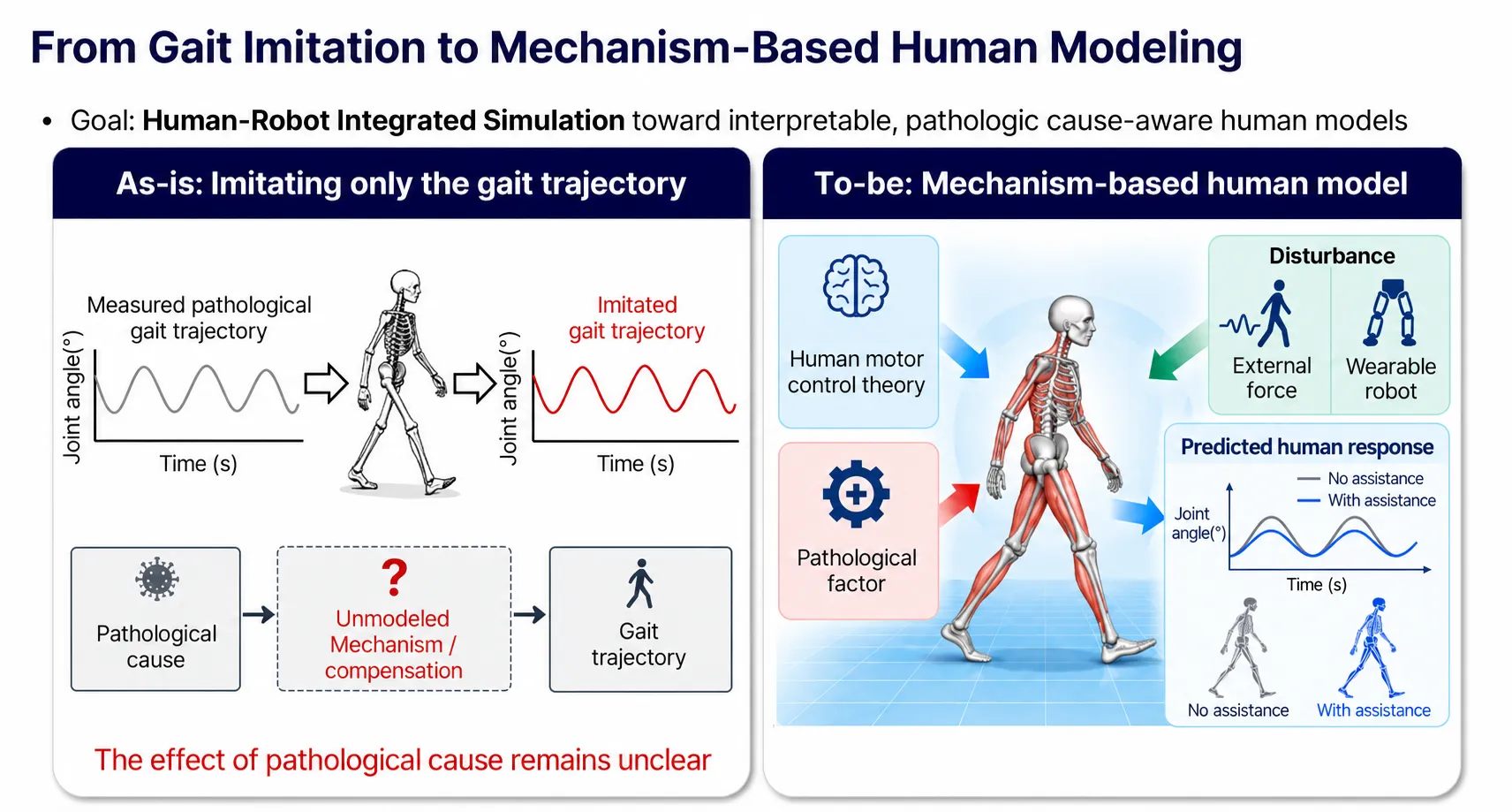
Many human simulations reproduce measured motion using motion capture data or reference trajectories. However, similar gait patterns may arise from different causes, such as muscle weakness, spasticity, joint contracture, or neurological impairment, and these differences can change the response to robotic assistance.
HRIS therefore focuses on modeling the mechanisms that generate motion, rather than simply reproducing motion outcomes. By incorporating pathological factors, motor-control mechanisms, musculoskeletal properties, and compensatory strategies, we aim to understand why a movement emerges and how it changes under robotic intervention.
Our research combines neuromusculoskeletal simulation, human motor control, biomechanics, and machine learning.
Modeling the Human from Neural Control to Physical Interaction
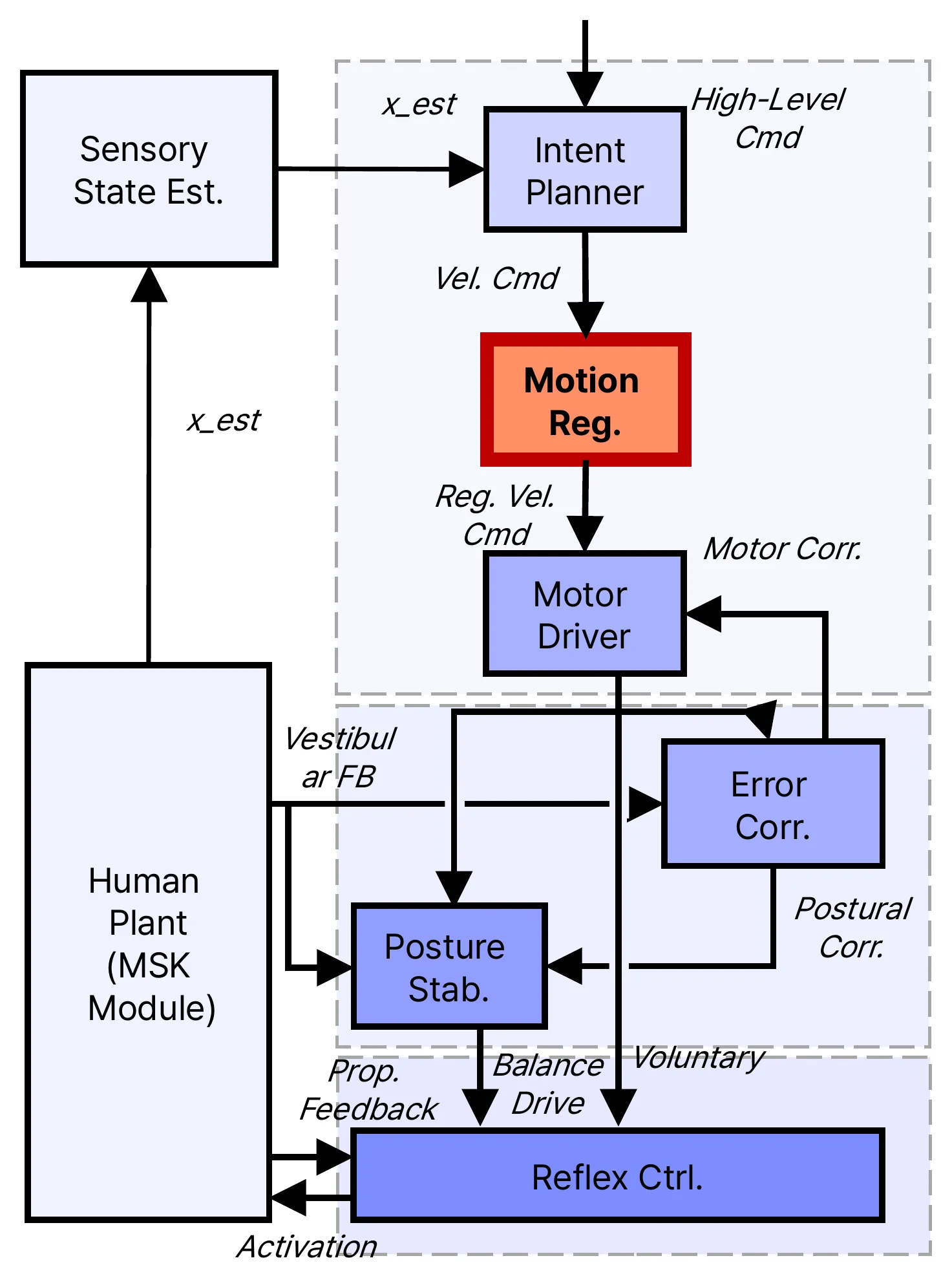
Our human model consists of two main components: the Human Controller and the Human Plant.
The Human Controller represents functional aspects of motor control, including voluntary motion generation, state estimation, balance control, disturbance response, and predictive correction. Rather than reproducing raw neural signals, we abstract functions associated with the motor cortical areas, basal ganglia, brainstem, cerebellum, and related systems into implementable control modules.
The Human Plant represents how motor commands are physically executed through muscle–tendon dynamics, passive joint and soft-tissue properties, posture-dependent moment arms, and spinal reflexes. Recent work includes a reduced neuromusculoskeletal model with passive muscle mechanics and stretch-reflex pathways implemented in NVIDIA Isaac.
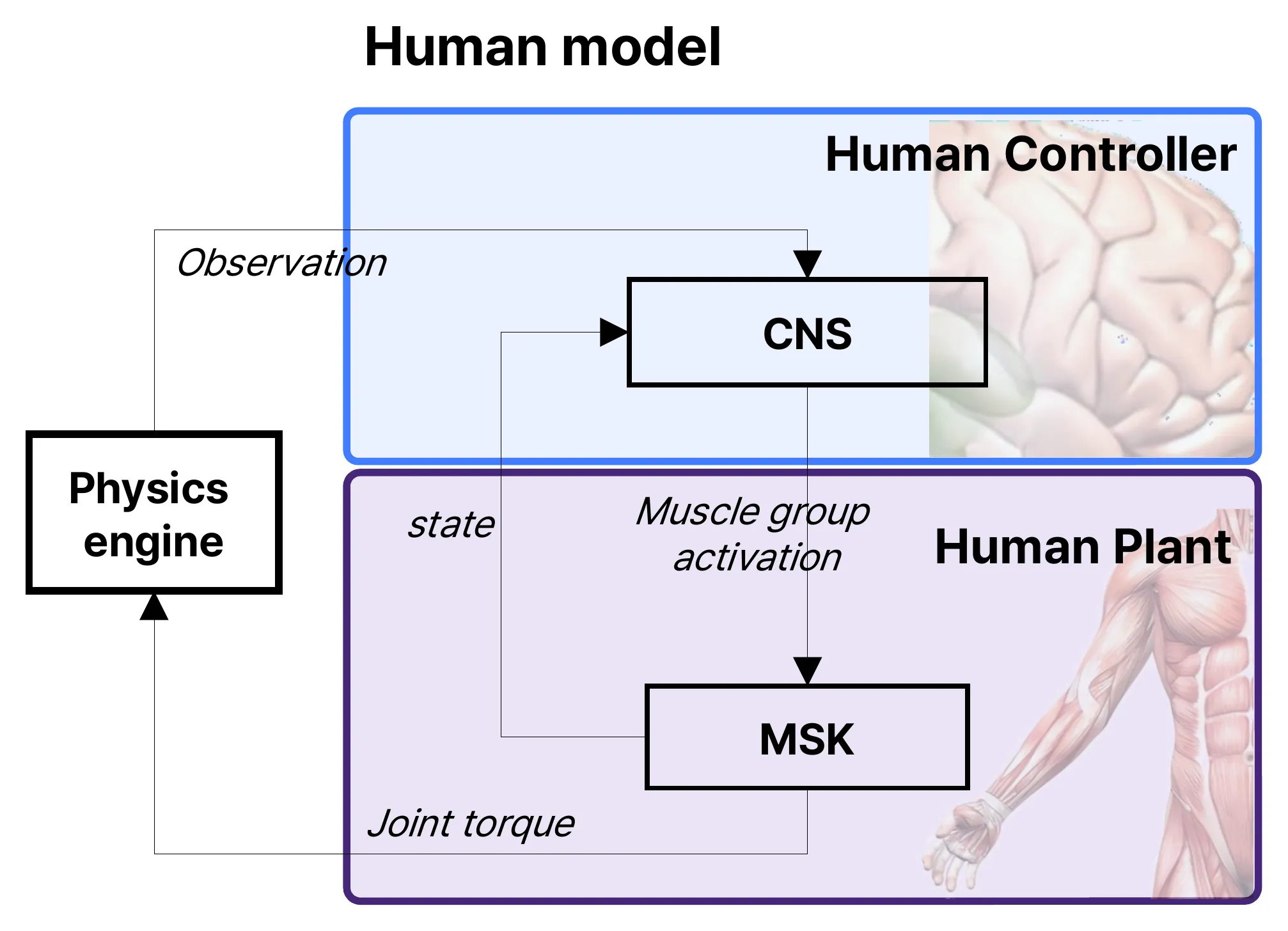
- ControllerGenerates motor commands and corrective responses
- PlantExecutes commands through body dynamics and environmental interaction
Toward Human-Centered Physical AI
The long-term goal of HRIS is to develop an integrated human–robot simulation framework that can represent interactions between wearable robots and humans with diverse physical and neurological characteristics. Through this framework, we aim to better understand individual differences in human motion and responses to robotic assistance, while providing a foundation for evaluating robot performance and safety across a wide range of human conditions before real-world deployment. Ultimately, our vision is to contribute to personalized wearable robotics and human-centered Physical AI that better account for human diversity.
Neurological Functional Limitation: Parkinsonian Freezing of Gait Due to Basal Ganglia Dysfunction
Motion changes caused by manipulating the initiation gate (pathological functional parameter) of the basal ganglia model (motion regulator).
Real case
Basal-ganglia-limitation controller
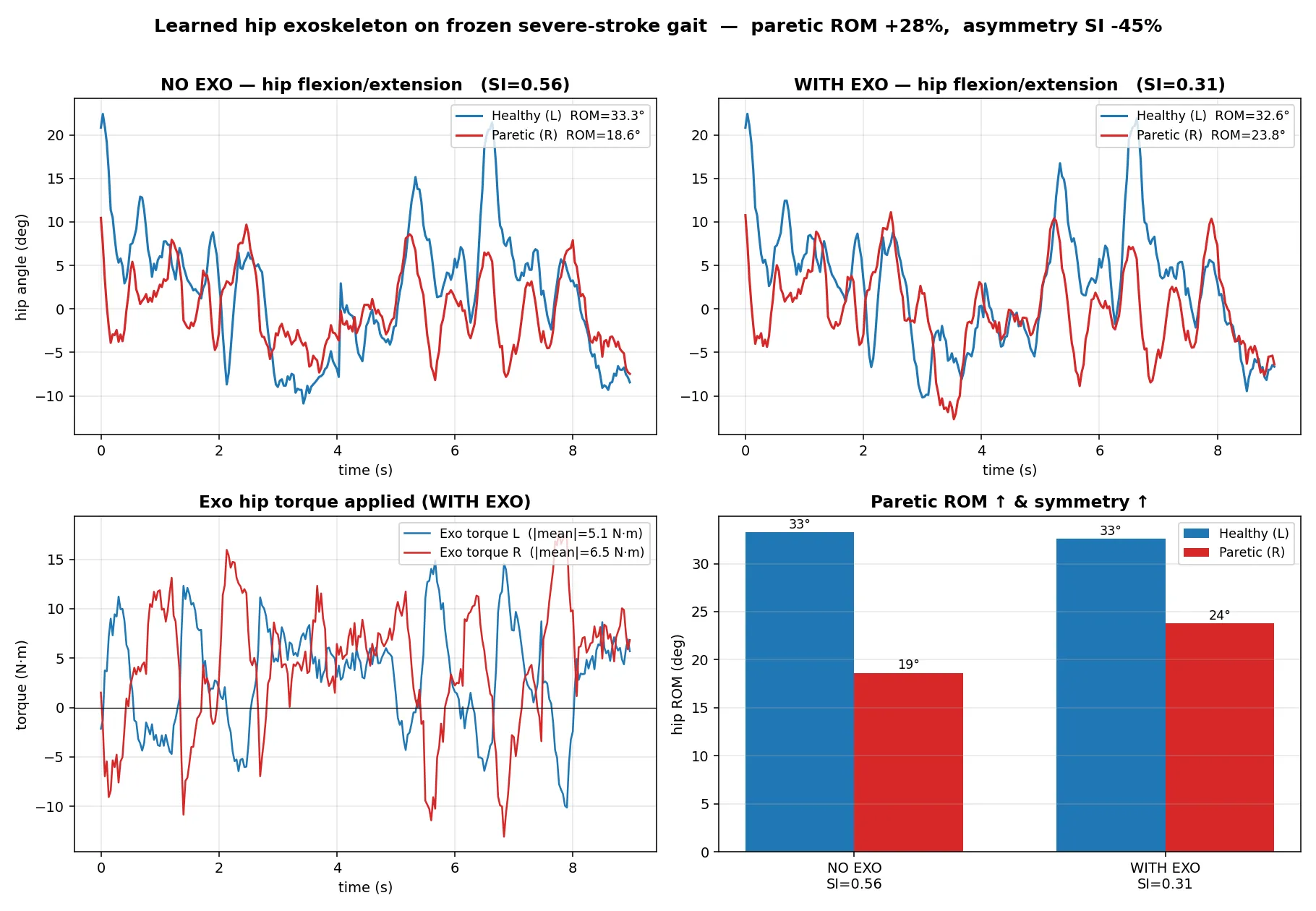
Robot-Assistive Policy Learning for Right-Hemiplegic Stroke